


Matt Blatt Kia of Toms River - What Kia Diagnostic Warning Lights Mean for Beachwood, NJ Drivers
A dashboard warning light can interrupt an otherwise normal drive through Beachwood, NJ, especially when your Kia still feels fine. That uncertainty is exactly why diagnostic service matters. Today’s Kia vehicles monitor engine performance, emissions operation, braking systems, tire pressure, battery condition, safety technology, and hybrid or electric vehicle systems when equipped. When a light appears, the vehicle is not guessing. It is alerting you that a control module has detected information outside the expected range. The right response depends on which light appears, whether it is steady or flashing, and whether other symptoms are present.
For Beachwood drivers, local routines can influence what warning lights show up and when. Short trips, frequent stop-and-go driving, parkway travel, school drop-offs, and errands around Route 9 or nearby Toms River can all place different demands on a vehicle. A light that appears after fueling may point in one direction, while a light paired with shaking, slow cranking, or poor acceleration points somewhere else. Our service approach focuses on understanding those details before recommending a repair.
Check Engine Light: The Most Common Diagnostic Concern
The check engine light is often misunderstood because it covers many systems. It can be triggered by a loose fuel cap, oxygen sensor concern, ignition misfire, EVAP leak, catalytic converter efficiency code, airflow sensor issue, or fuel system irregularity. A steady check engine light typically means the vehicle has detected a fault and stored a code. A flashing check engine light is more urgent because it can indicate an active misfire. Continued driving with a flashing light may cause additional damage, so prompt service is the safer path.
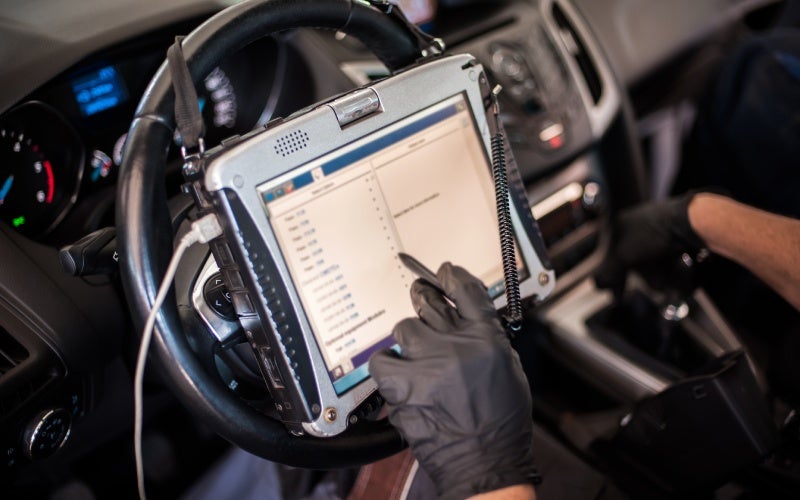
Code reading is only the first step. A code may identify a system, but it does not always identify the failed part. For example, a lean fuel code could involve an intake leak, fuel delivery problem, sensor issue, or exhaust leak. Our Kia-certified diagnostic process combines scan data with live readings, visual inspection, component testing, and model-specific service information.
Other Warning Lights Kia Owners May See
- Battery light: This may indicate a charging system concern, weak battery, alternator issue, or electrical connection problem.
- Oil pressure light: This requires immediate attention because low oil pressure can damage the engine quickly.
- Brake warning light: This may involve brake fluid level, parking brake status, or a braking system concern.
- ABS light: Anti-lock brake system operation may be limited, even if basic braking still works.
- TPMS light: Tire pressure may be low, or a tire pressure monitoring sensor may need attention.
- Airbag light: A supplemental restraint system concern may affect airbag readiness and should be inspected.
Not every light means the vehicle must stop immediately, but each one deserves the proper level of attention. Oil pressure, temperature, brake, and flashing check engine lights are more urgent than many reminder indicators. If multiple lights appear at once, or if the vehicle enters reduced-power mode, schedule service as soon as possible.
Why Professional Diagnostics Protect Time and Reliability
Replacing parts based only on a dashboard light can become frustrating. Warning lights often involve connected systems, and one issue can cause several symptoms. Professional diagnostics help avoid unnecessary part replacement by confirming the root cause. Our technicians can inspect wiring, connectors, battery health, fluid levels, filters, ignition components, brake-related systems, and emissions components as needed. This is especially important for late-model Kia vehicles with advanced electronics, driver assistance features, turbocharged engines, hybrid systems, or EV components.
Using genuine Kia parts after a confirmed diagnosis also matters. OEM parts are engineered for your specific Kia model, which supports fit, communication, performance, and long-term dependability. Our parts department can assist with maintenance-related parts such as filters, brake pads, wiper blades, batteries, spark plugs, belts, and other components. When installation is handled by trained technicians, your vehicle receives parts and service designed to work together.
What to Tell Your Service Advisor
The more information you provide, the easier it is to recreate and diagnose the concern. Before your appointment, think about when the light appeared, whether the vehicle had just been fueled, if recent maintenance was performed, and whether symptoms happen during cold starts, highway driving, braking, accelerating, or idling. Mention noises, smells, vibration, reduced fuel economy, hard starting, or warning messages on the display.
- Note the light behavior: Tell us whether the light is steady, flashing, intermittent, or paired with other indicators.
- Describe driving conditions: Share whether the concern happens on short trips, longer drives, hills, traffic, or highway speeds.
- List recent changes: Include recent fuel stops, battery replacement, tire service, oil changes, or accessory installation.
- Bring service history: Previous repair records can help our technicians identify patterns and avoid repeat testing.
Even small details can point toward the right system. A rough idle after a cold start may require different testing than hesitation at highway speed. A TPMS light after a tire replacement may require a different approach than a TPMS light after a pressure drop. Good communication helps our diagnostic team work efficiently and accurately.
When to Schedule Service
If your Kia has a warning light and normal performance, schedule a diagnostic visit at your earliest convenience. If the light is flashing, the vehicle is overheating, braking feels abnormal, the oil pressure light appears, or the vehicle loses power, treat the situation as urgent. Avoid long drives until the concern is checked. Prompt service can help protect your engine, emissions components, brakes, battery, tires, and safety systems.
Matt Blatt Kia of Toms River makes it simple for Beachwood, NJ drivers to get answers. Our service center offers online scheduling, factory-trained Kia technicians, genuine OEM parts, and support for routine maintenance as well as more advanced diagnostics. Whether you drive a Sportage, Telluride, Sorento, Seltos, K4, K5, Carnival, Niro, EV6, EV9, or another Kia model, we are ready to help you understand the light, confirm the cause, and plan the right next step. Schedule your diagnostic appointment today and drive with more confidence.



 Warranties include 10-year/100,000-mile powertrain and 5-year/60,000-mile basic. All warranties and roadside assistance are limited. See retailer for warranty details.